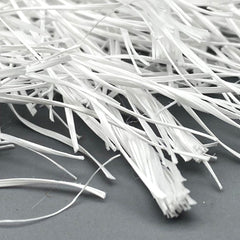
Fig. 1 Final Material Choice: Polypropylene Fiber.

Fig. 2 Wastewater Filtration system
A City of Hamilton treatment plant releases wastewater into a nearby river containing high levels of microplastics, ranging in size from 10-20 µm, which are significantly harmful to aquatic ecosystems in the river. The City of Hamilton requires a modification to its current system that is eco friendly, and cost-effective, to capture and remove the microplastics. This solution should minimize associated carbon emissions and maintenance, it must be able to filter particles of the specified sizes, and it must be mechanically sound enough to withstand use in wastewater treatment processes. Considerations should be made to accommodate the City of Hamilton’s low budget for the purpose of reducing cost wherever possible.
In this project, our team was tasked with the conceptual design of a water filtration component, by considering its mechanical properties and performance. Our two primary design objectives were minimal carbon emissions, and cost effectiveness. With these objectives in mind, we derived Material Property Indices (MPIs) to select for the best materials that satisfied both objectives. The materials were also evaluated for their ecological impact.
| Constraints | Functions |
|---|---|
| Yield strength must be higher than stress. ( σ < σ y) | Removes microplastic contaminants |
| Stiffness of the filter needs to be less than a threshold. | Withstand use in wastewater treatment |
| Filter must be recyclable |
Questions asked:
Steps Taken:

Fig. 5 Ashby chart of Yield Strength vs Density and Cost
Decision making
Porosity Adjustments

Fig. 6 LCA of Polypropylene Fiber
As the group Coordinator, I would:

Fig. 3 Objective Tree
| --- | --- | --- | --- | --- |
Fig. 4 Morph Chart

Fig. 7 Polypropylene Fiber Eco Audit
Throughout this project, I gained a lot of new experiences and skills. I learned about the importance of material properties, how to measure them, the importance of other factors such as budget and environmental impact, and the adjustments required for using porous materials. This was my first foray into the materials aspect of design and engineering and it provided me insight into the true complexity of each and every engineering project. It is our role as engineers to have justifications for each and every decision, down to the choice of building materials.
This was also my first Project Pitch, and it gave me an opportunity to practice presentation skills in an engineering setting. My team and I needed to collaborate to produce a compelling, seamless and fully fleshed out presentation. Similarly to presentations in other courses, this pitch involved public speaking, but it was to an audience that was scrutinizing each decision to ensure that the problem was completely addressed. I needed to be prepared to answer tough questions and justify all of the decisions made.
Due to the more conceptual nature of this project I had difficulties setting time aside to properly work on my tasks, often leaving them later than I should. For future projects, of similar nature or not, I should endeavour to manage my time. Especially in a group work setting, timeliness is critical to smooth work flow and productivity. To make sure that I complete tasks in a timely manner, I should have better organized myself and worked with consideration for the team, and I can ask myself:
What work needs to be done right now?
Who is depending on me to get my work done?